This next Shetland fleece sample caught my eye as soon as I first saw it. It was sent to me by
Cathy as a part of
this batch.

It is an adult fleece, and is the coarsest to touch so far. It is a dual coated fleece, with the typical triangular shaped staples of such a fleece. The fiber length ranged from three to six inches, and this fleece was full of VM (vegetable matter.) As you can see, the crimp is too disorganized to count!
At first glance, the word "black" comes to mind to describe the color. Not unsurprisingly, the tips are sunbleached, anywhere from blond to brown. A closer examination however, shows white fibers mixed in throughout the fleece. The amount of white varied throughout the sample, but it was there nonetheless. In fact, it is the white fibers that contribute to it's coarseness. The bits with less white, are softer. This coloration got me curious about the various Shetland sheep colors.
Shetland sheep are recognized to have
eleven distinct colors, and
30 color patterns, but I was at a loss to figure out which one this fleece was. After a chat with
Tina from Marietta Shetlands, I determined that this fleece must be from a sheep which has what is called the
iset pattern. This refers to a dark colored fleece with many white fibers giving it a bluish cast from a distance. I also learned from Tina, that Shetlands can change their color over the years! What a versatile breed for a spinner's flock, eh?
One thing that I had to deal with before spinning was all the VM. It was loaded with it. I know some spinners who refuse to deal with such a fleece, but the color was too lovely to not spin it. I was able to get a lot of it out with a vigorous shaking before washing. I knew from experience that more would come out in processing and spinning.
Now, I'm going to take a little side trip here, because I learned something when I washed my sample. Back in the day, when I first learned to spin, I read somewhere that fleece washing temperature must be kept very hot, to keep the lanolin melted. The rational was that if the temperature dropped too low, the lanolin would begin to re-solidify on the fiber.
Well, with this sample I set it to soaking in hot, hot water and a large squirt of Dawn dish liquid as usual. Then I went to do something else, got distracted, and forgot about the fleece. In fact, I forgot about it so completely that by the time I got back to it, the initial soaking water was barely lukewarm. This dismayed me because I'm not real keen on exposing wool fibers to an extreme temperature change (as in an immediate second very hot soak), as I want to avoid the possibility of felting. So I continued rinsing with cool water and spread it out on a towel to dry.
When I went back later to turn the fleece, I was delighted to discover that the it was wonderfully clean and not greasy! The fear of the grease reforming on the fibers is evidently unfounded. What a happy revelation. This will make my fleece washing much more relaxed in the future. (And speaking of lanolin, for a very interesting article on it, click
here.)
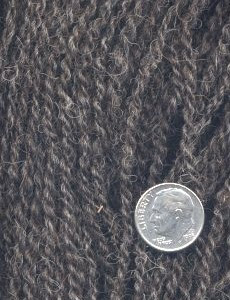
Anyway, here's the yarn. It doesn't look bluish close up, but it is a lovely color of grey.
The particulars:
* Preparation - drumcarded to blend colors
* Spinning ratio - 8.5 to 1
* Singles - 28 WPI
* 2-ply - 14 WPI
* Washed weight - 50 grams
(I forgot to weight it before washing :o
* Yardage - almost 93
© 2007 Leigh's Fiber Journal


_washed.jpg "Shetland lamb staples.")


_washed.jpg "Samples of the 2 types of staples found in this Shetland fleece.")


_raw_A.jpg "Raw Shetland lamb staple.")
_washed.jpg "Washed staples.")


